Visit my new blog

I´ve decided to split my blog in two. I will continue to post DIY projects and musings here, but (serious) pictures, taken on film of course, will be posted in my new blog "Silver Halides"

I now consider Caffenol to be a developer like any else. As such the new blog will focus more on the pictures, rather than the process.

Wednesday, 28 November 2012

Caffenol Cookbook

I've been privileged to be part of a web publication collaboration on the subject of Caffenol.

Though not entirely finished at the time of the posting, it is not far from completion. Please note that it is in Flash format at the moment. Other more mobile/iPhone/iPad friendly formats will be available later.

The Caffenol Cookbook

Sunday, 4 November 2012

I adore the I Adore

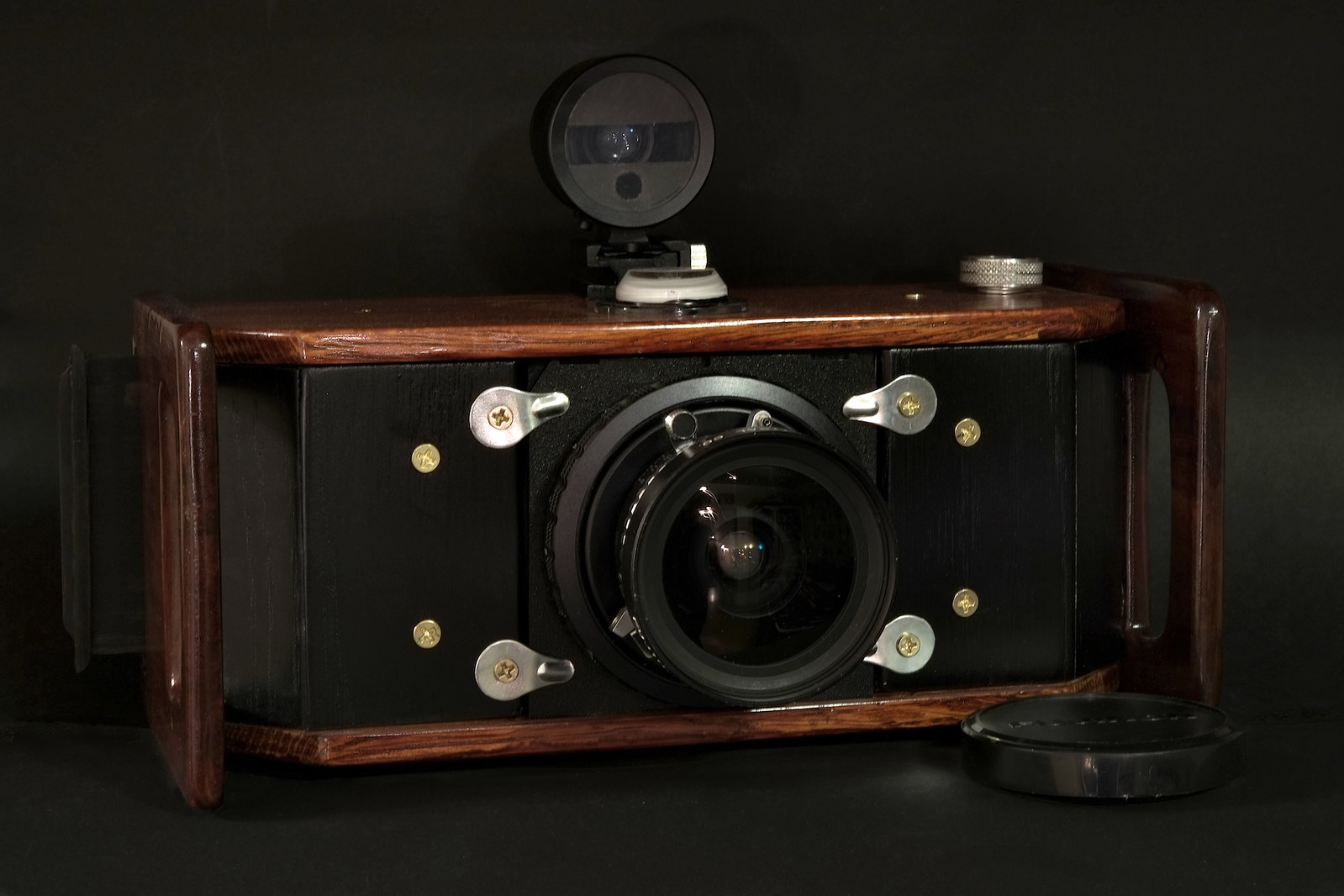
Though it worked fine from the get go, I have been tinkering a bit with the 6x17 "I Adore" camera over the last few months. Small things, some cosmetic, some practical. Made the light seals more substantial. Added a level and modified the finder mask to allow vieiwing of the level whilst composing. Added a tripod mount. Checked and adjusted the lens flange to film plane and other minor changes.

Still have to find a solution to films of variable thickness. The pressure plate works well with heavy duty Kodak films, but less so with the delicate Fuji films. Having said that, the picture of the palace below is sharp all across the frame, and it was shot on Acros. Maybe I need to stop worrying and just shoot more.


I Adore, DIY 6x17

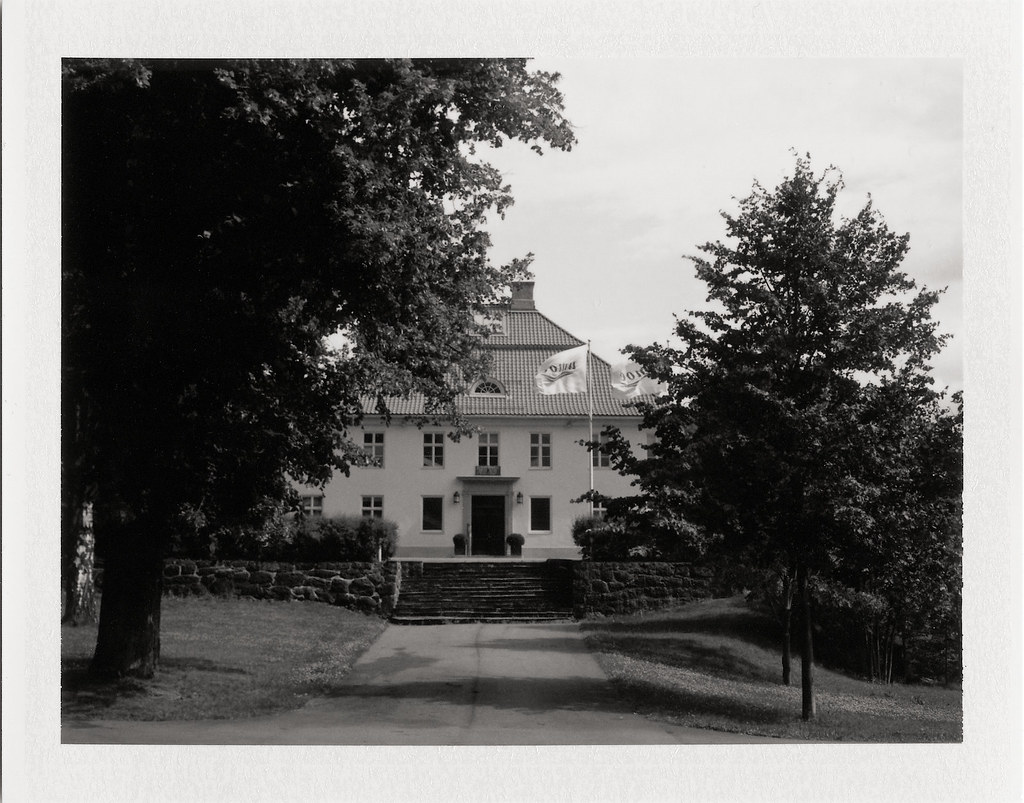
Norwegian Royal Castle, "I Adore" 6x17, Acros, Caffenol-C-M(RS)

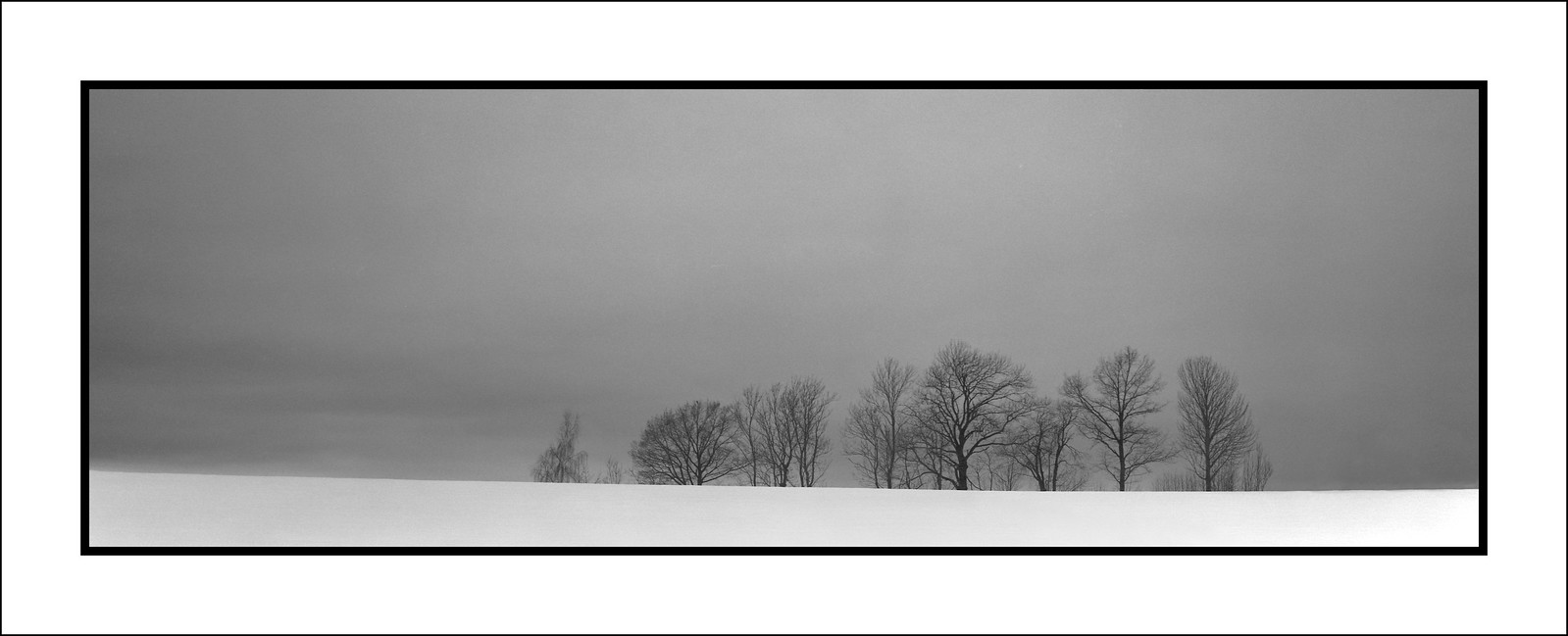
Trees in winter, "I Adore" 6x17, Portra BW400, Caffenol-C-H(RSA)

Monday, 15 October 2012

Focusing off

After swapping to the Ektar I collimated the lens yet again.

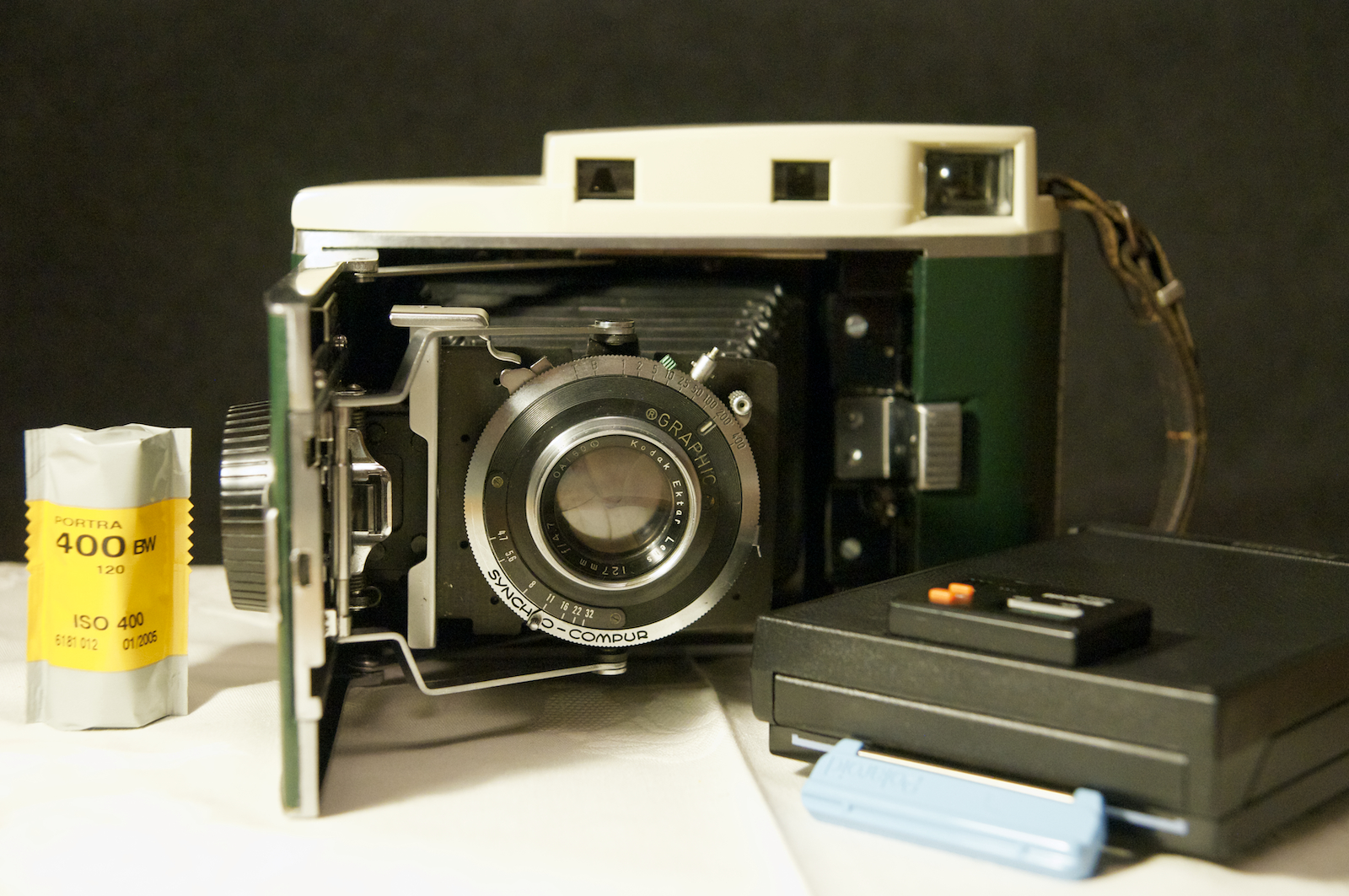
Now with Kodak Ektar 127/f4.7 in Synchro-Compur shutter


The shutters are not the same, and even if they were (the same thickness for instance), the two lenses would have different film to flange distances anyhow. But it would seem I got it wrong. Didn´t show up too distinctly on 400 speed films as the aperture tended to be f8 or smaller. But on 100 ASA film and low autumn light and big apertures there was a visible back focus on all images.

Another go then. Ended up moving the lens forward just over 1mm.


And performed the following test.

Can you tell where I focused?


The back of the Photography Encyclopedia is in plane with the bottommost Asterix volume, The Lord of the Rings with the 5th volume, the outer two volume 10 and 13 respectively.

More background data:
The volumes are tiered 10mm in from the one below, 130mm in total bottom to top.

Shot a f4.7, distance 91cm from front of lens, 107cm from film plane (approx). DoF approx 58.3mm, 28.4mm in front of subject distance, 29,9mm behind. Which should mean that the same number of volumes are in focus above and below the one IN focus.

A bit dark (my two kids got bored of holding the dark background up - made do with the one shot), but can you guess which Asterix volume I focused on, and did I get it right?

Saturday, 22 September 2012

A Kickstarter project worth supporting

Hi

Thought I would let you know of a project that I hope will get the funding needed to go full steam ahead. Grabriel  M. Aguirre a gifted photographer, known to many at RangeFinderForum (RFF) as Gabriel M.A, has a novel idea to portraying Parisian women and Paris itself, both at the same time.

If interested take a look at his Kickstarter page. Place a pledge even.

http://www.kickstarter.com/projects/gabrielma/vitruvian-woman-in-paris-depliage-du-soi 

Thursday, 6 September 2012

Kodak Tri-X (TX400 or 400TX) in Caffenol-C-H

I´ve recently developed two rolls of Tri-X. Both over expiry, one of the previous emulsion, and one of the current. Both worked out well.

Tri-X has always been Tri-X. But look at the designation on the box, and on the film rabate you´ll see that indeed they are different. Modern (post 2007) Tri-X is called 400TX. The former emulsion is called TX400 or just TX. Reputedly the newer emulsion is more fine grained and requires shorter development. Finer grain? Possibly, not that I would fret over big fat grain on the older version, if I was so lucky to find a cache. It´s still very good in Caffenol. I did however develop the two films (very) slightly differently.

Modern Tri-X, exposed at EI400, in Caffenol-C-H(RS) and 0.7g/l of Potassium Bromide (KBr). A small recap of the RS recipe bottom of post.

14 minutes and 30 seconds @ 20C/68F. 12 initial inversions, and 3 every top of the minute as usual, save the last at 14 minutes (i.e. stand from 13 minutes). Water stop, 1 minute. Normal fixing and washing. All at as close to 20C/68F as possible.

Modern Tri-X, box speed, Caffenol-C-H(RS), 14m30s @ 20C. DIY 6x17 Camera
Click on the pictures, they are large and you will see just how good Tri-X can be. I really got lucky on these. Shot with my DIY 6x17

A prior attempt to expose a roll of Trix met with just about every problem in the book. Firstly the back on the Super 66 has developed a light leak. Luckily the frame shown below, and the first frame are exempt from damage, all the others are not.Secondly the first 5 frames of the film, all have a dark lower 1/4. Why is a mystery. Again this frame went clear.
Thirdly the self timer switch on the leaf shuttered lens got engaged without me noticing. Once I thought I had the shot in the bag (the mirror swinging up makes a loud kaaawhuump) and I started to walk away I heard the dreadful sound of the timer clockwork. I rushed back and reframed blind (the mirror was still up of course, obscuring the view, so why am I looking into the viewfinder?). And better framing than this is difficult even with finder. Missed the focus by a foot though. So now my reflection is more in focus than I had hoped. Ah well, that´s Sod´s law I suppose.
But back to business. This is the older emulsion, and yes there is slightly more grain, but still very good for a 400 speed film. Tonality is good. Due to the problems with exposing this film, the example frame is not the best.
Again, Caffenol-C-H(RS), this time with 1.2g/l KBr. All else equal.
Old Tri-X, box speed, Caffenol-C-H(RS), 14m30s @ 20C. Kowa Super 66 w/150mm f3.5

Caffenol-C-H vs C-H(RS)
In a 1 liter solution, each:
Sodium Carbonate, anhydrous 54g - 40g
Ascorbic acid 16g - 16g
Instant coffee 40g - 40g
Potassium Bromide (KBr) whatever, same for both. Between 0.6 and 1.5g/l depending on emulsion.

As you can see, only the amount of soda (sodium carbonate) is reduced. This lowers the pH, makes the developer less active. My experience says it´s still active enough. I haven´t really adapted my times much.
Benefits over regular C-H (same applies for C-M(RS) over C-M). I find grain is slightly less pronounced, and the tonal gradation is smoother, slightly less contrast maybe. 
With regards to the two Tri-X versions. Both are perfectly good films. I´ve already ordered a couple of bricks of modern Tri-X. ;)

Thursday, 30 August 2012

Lucy the hybrid 120 roll film adapter

I´ve been having way too much fun with the 600SE converted 110A. With two CB-103 pack film backs I am equipped for any Polaroid occasion. One loaded with FP100C, the other with FP100B or 3000B. I like it so much I thought I would convert a 120 rollfilm back to mount on the camera too. Who would have thought it, the 110A a system camera?

The two main parts needed is of course a roll film back. I chose the Graflex 23 6x9 for its size, the Mamiya type backs may be better, but they would obscure the viewfinder. And you also need the mounting plate for a 600SE. On one of my CB-103 backs I measured the distance from the mount face as it meets the camera, and the film plane (I inserted a used film pack) and measured the corresponding distance with the Graflex taped to the mounting plate. 3,2mm needed shaving off somewhere. It can´t be done on the Graflex, there isn´t enough material to grind off. So I took a Dremel to the mounting plate and after a couple of hours had ground out enough for the Graflex to fit.

I then made a skirt and glued it to the Graflex in order to mate it to the mount. Painted black and applied light sealant before screwing the two halves together.

The parts, some tools and a cup of Livanto Lungo. Skirt seen to lower right.
It fits around the edge of the Graflex, glued 3.2mm from the face it
forms a lip enabling mounting to the adapter plate

The 600SE mounting plate, or adapter. 3.2mm has been ground out
from the right edge and just beyond the left edge of the light opening. Width
as for the Graflex back, not much more than the breadth of the opening top to bottom.

Lip glued to the Graflex, allowing the back to fit into the depression
in the mounting plate. Then screwed to the mount. Flocked all round.

As seen from the mount face

Mounted on the 110A
Edit: It works! From the first roll through the back. Another first (will make a separate post regarding the film used), Portra BW400CN in Caffenol-C-H (RS)

Polaroid 110A/600SE, Portra BW400CN, Caffenol-C-H

Wednesday, 6 June 2012

Polaroid Pathfinder 110A brought back to life

A friend sent me an old 110A, believing I could revive it to actually taking pictures again. I pondered on many 4x5 conversion solutions, ending up looking long and good at Noah Schwartz´low profile back, very slick. However, after browsing Nate's (Option8 fame) creations on flickr and polaroidconversions.com, I ended up taking an easier route, grafting a Polaroid 600SE back adapter to the 110A, making it almost as versatile as anything with a Graflok back, only slightly smaller Can now mount just about anything up to 6x9 in 120/220 with the right adapter, not to mention Polaroid backs (like the CB103 pack film back on her now), and even 4x5 (though not covering the frame completely).
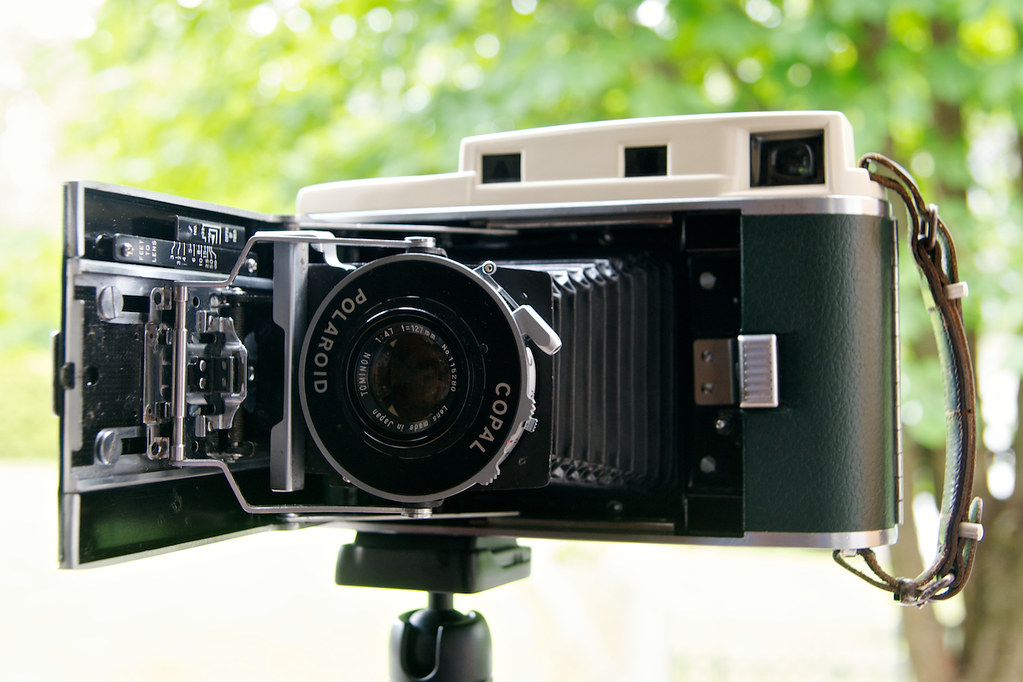
The hardest part was manufacturing the adapter plate. I made one that both functions as a mount for the adapter, but is also the side wall of the camera (where the end has been chopped off). The film plane has as a result of the plate and the 600SE adapter been moved back an inch or so, so the end stop for the lens has been moved back correspondingly.

The camera was a bit worse for wear, so she´s been given a good going over. The Ysarex in Compur #0 shutter was a bit gummed up, so exchanged for a Tominon in Copal #1 press shutter. Needed to widen the mount for that. I recovered her in Cameraleather green composite leather (comes in sheets). The top cover has been chopped too, filled, sanded and painted cream. I think she looks quite nice.

Polaroid 110A w/600SE back adapter - front view Tominon 127mm f4.7 in Copal press shutter


Polaroid 110A w/600SE back adapter - front view Tominon 127mm f4.7 in Copal press shutter
You can see the end of the camera has been chopped


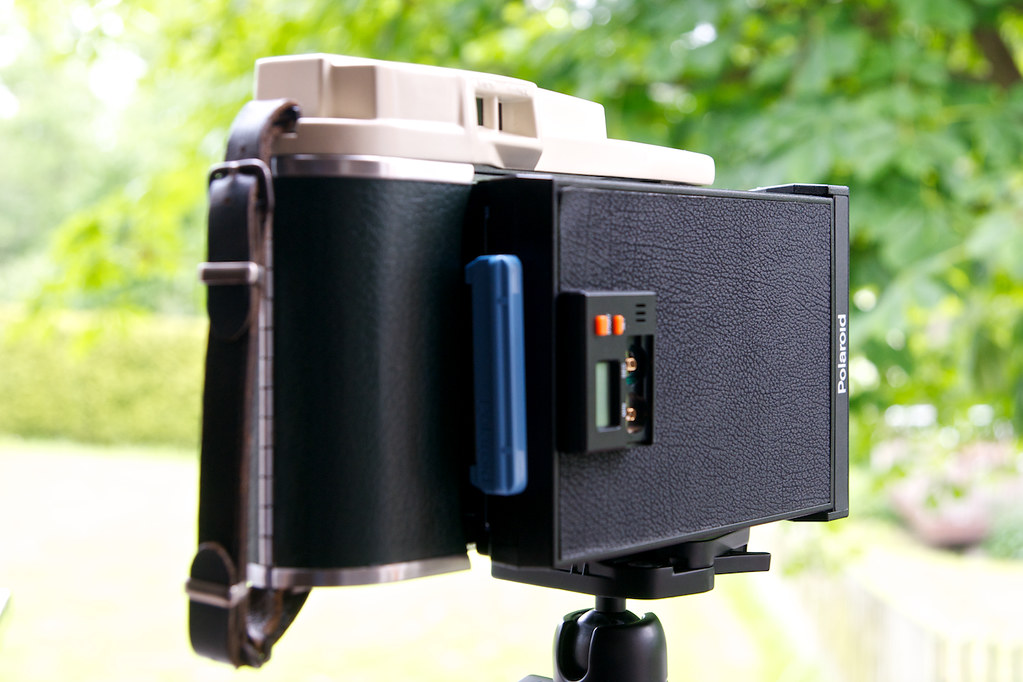
Polaroid 110A w/600SE back adapter - rear view with CB103 back attached


Polaroid 110A w/600SE back adapter - rear view with CB103 back attached


Polaroid 110A w/600SE back adapter - rear view 600SE adapter

Tools used? A Dremel with both cutting disks, and grinding heads comes in handy, set of small screwdrivers, emery cloth and sanding paper (120, 240, 600 and 1200 grit), drill and drill bits, pliers, hack-saw and scissors.

Materials and parts? 110A of course, Polaroid 600SE adapter, CB103 back, (in my case a Tominon in Copal shutter due to iffy shutter on the Rodenstock Ysaron), 1.5mm sheet aluminium (for adapter plate), Cameraleather.com Composite leather covering, paint (cream semi gloss and flat black), Epoxy glues and filler, Sugru, Light sealing material and 3mm machine screws

2012-07-02 UPDATE:

And work it does:

Lucy the 110A/600SE Hybrid - Fuji FP 3000B

Lucy the 110A/600SE Hybrid - Fuji FP 100B